Departure
Reflections on the build up to a big trip

I’m relaunching this Substack with a new title, and some news: from February, my partner and I will be travelling full time until the end of 2026. After almost four fascinating years as a staff writer for the Church Times, for whom I have reported from Israel, Palestine, Ukraine, and the Caucasus, as well as covering the perma-drama of the Church of England, I am going to return to freelance writing, with a focus on religion, culture and travel. That will include weekly pieces here, and ad hoc posts on Instagram @phrancismartin.
The name, Odessays, has three readings (if you find more, please let me know). Firstly, these posts are going to be more odd essays than conventional travel pieces. There’s likely to be a focus on religion in the places I visit, and some posts might mix description with reflection (a kind of ‘meta-travelogue’ on the hows and whys of writing about travel). Nonetheless, the writing here will function as the description of an odyssey, of sorts — this is the second reading. The third simply pays homage to the port city which captured my imagination a dozen years ago, and continues to inspire me.
Please subscribe, and share this with friends if you like what you find. And here, without further introduction, is the first part of my first odd essay, reflecting on the discomfort of the period before departure, and the travel advice of a more august Francis.
Departure — Part One
This trip will be the start of something new, but it hasn’t yet begun. I’ve always thought that the worst part of any trip is the time immediately before departure, when your mind is already fixed on the journey. The hour or two before you have to leave for the airport is the most tortuous, with nothing left to do in preparation for the trip, but no chance of being able to settle to an unrelated task. The longer the trip, the longer the period of listlessness before it begins, and I’m finding that for a trip of many months, the pre-departure blues lasts for a few weeks — and I’m writing in the midst of it.
Work on the itinerary throws up questions about the types of experiences and sites we want to prioritise. Francis Bacon wrote that the “things to be seen and observed” while travelling include “the churches and monasteries, with the monuments which are therin extant; the walls and fortifications of cities and towns, and so the havens and harbours”. Looking back on my travels over the last few months, I think Bacon would have approved. A trip to Rome in December involved innumerable churches, including St Peter’s, and in the autumn I spent a few days on Mallorca, staying in a former monastery nestled in the mountains (which I wrote about here).


Of walls and fortifications, there are snaps from Alcúdia in Mallorca, the city walls completed in the 14th century at the behest of the Mallorcan monarchy (the fortifications taking rather longer to build than they should have done, due to the only workforce being the townsfolk who built in their spare time. It wasn’t until labourers were sent from other towns, supplemented with a cohort of Genoese prisoners of war, that the walls were finished). And in Albania in the summer I partly fulfilled Bacon’s injunction to visit the “courts of princes”, exploring the dilapidated, but still imposing, former home of King Zog (an experience far more interesting than a visit to Buckingham Palace).
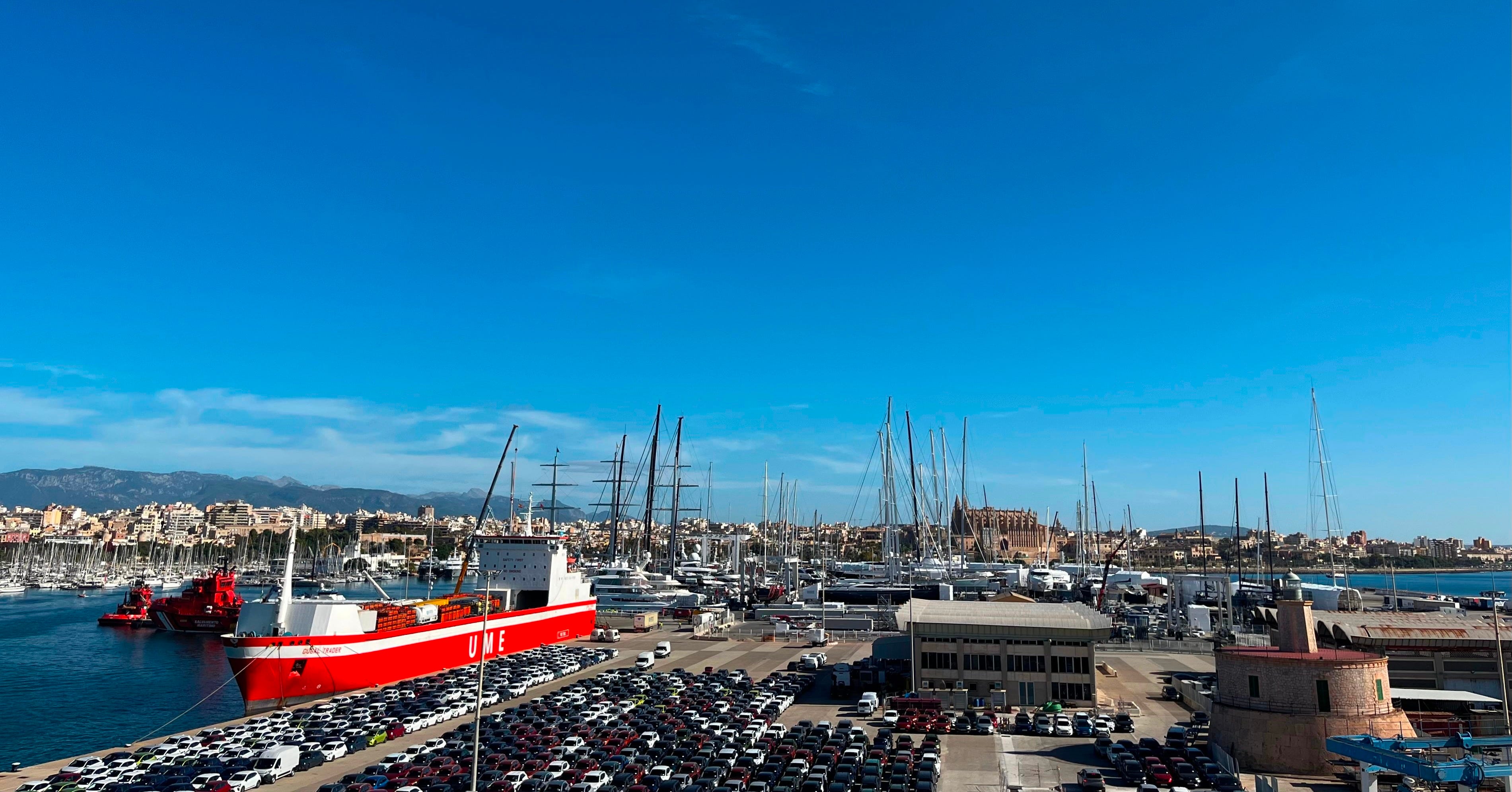
From Mallorca I took the ferry across the Balearic Sea to Barcelona, a journey which afforded ample views of “havens and harbours”, as well as Montjuïc Castle as we came into port, the slab-like profile of the 17th century fortress more like mid-20th century fortifications than a castle. Off the coast of Marseille I encountered both on one short boat trip: 16th century Château d’If, notable as a setting in Dumas’ Conte de Monte Cristo, and a little further out the island of Pomègues , on the southern tip of which squats a World War II battery and barracks, now occupied by thousands of seagulls.


Bacon would likely have enjoyed such an excursion: his suggestions have a militaristic bent, recommending visits to “armories; arsenals; magazines; exchanges; burses; warehouses; exercises of horsemanship, fencing, training of soldiers, and the like”. As the list goes on, you might start to think travelling with Francis Bacon sounds like a chore (certainly when compared to his bon vivant namesake). Certainly, I find that I have limited appetite to take up Bacon’s suggestion to attend “consistories ecclesiastic” (i.e. church courts). But Bacon does also recognise that there are lighter options — “triumphs, masques, feasts, weddings” — which, perhaps with a wink, he says are “not to be neglected”. He also lumps “capital executions” among such jollities, but unfortunately we’re not planning to travel to the United States.
Where, though, are we going? The trip will start in Australia, primarily to visit family, with whom we will also spend a week on New Zealand’s south island. Australasia in some ways will be the prologue, with the first stage of the trip beginning in earnest when we depart. The itinerary is roughly sketched and liable to much reworking, but in essence we are planning a journey north from Australia through south-east Asia, finishing in Hong Kong, around June. Some weddings will draw us back to Europe for a few months, with two months travelling between smaller towns in France and Italy, a la Lawrence Sterne’s Sentimental Journey. The third part of the trip, which is currently little more than a glint in our eyes, will involve longer stays in Japan, China, Taiwan and South Korea, travelling between them by ferry. The idea of taking the train home through Russia is a glint in only my eyes.
Follow for part two, published next week, which considers why air travel is not necessarily as unromantic as it might seem when compared to long-distance sea voyages.